
The Science of Habits: How Behaviour Change Really Works

Most of us know what we would like to change. We want to walk more, sleep better, read regularly, or speak more kindly under pressure. Yet good intentions often fade by the second week. If that has happened to you, it does not mean you lack discipline. It usually means the plan relied too heavily […]
Overthinking: Why Your Mind Loops, and How to Break the Cycle

You replay a conversation from hours ago, wondering what you should have said. You imagine everything that could go wrong tomorrow, then worry about worrying. You lie awake turning the same problem over and over, without ever reaching a solution. If this sounds familiar, you are not alone — and you are not broken. Overthinking […]
Personality Development: Building Confidence, Habits and Social Skills

Many people describe themselves as shy, disorganised or lacking confidence, as if those labels were fixed for life. Personality development is often misunderstood as changing who you are. In practice, it is about building the behaviours and habits that help you live more confidently, relate better to others, and cope more steadily with everyday challenges. […]
Emotional Regulation Skills You Can Practise Daily

Emotions are not problems to be switched off. They are signals: anger may point to a boundary, sadness to a loss, anxiety to uncertainty. Emotional regulation does not mean feeling calm all the time. It means noticing what you feel, understanding what it is telling you, and choosing a response you will not regret later. […]
Sleep Better: A Research-Based Night Routine for a Calmer Mind

If your mind only seems to wake up when your head touches the pillow, you are not alone. The day’s worries, unfinished tasks and tomorrow’s plans often queue up at bedtime, just when you most need rest. A night routine cannot force sleep, but it can give your body and mind a clearer signal: the […]
Self-Help for Low Self-Esteem: Building Quiet Confidence

Low self-esteem rarely announces itself loudly. More often it sounds like a quiet inner commentary: “I am not good enough.” “Everyone else copes better than me.” “If they really knew me, they would be disappointed.” You may still work, care for others and keep going, while privately doubting yourself at every step. Quiet confidence is […]
Self-Help for Anger: Cooling-Down Skills That Work

Anger is a normal human emotion. It can alert you that a boundary has been crossed, that something feels unfair, or that you need to speak up. The difficulty is not usually anger itself. It is what happens in the seconds after anger rises, when a sharp word or a message sent in haste can […]
Self-Help for Stress and Burnout at Work: A Recovery Plan

Burnout does not usually arrive in a single bad week. It builds slowly: sleep becomes lighter, mornings feel heavier, small tasks take longer, and work that once felt meaningful starts to feel draining or pointless. You may still be functioning — answering emails, attending meetings — while quietly running on empty. Recovery from burnout is […]
Self-Help for OCD: What Helps — and What Keeps OCD Strong
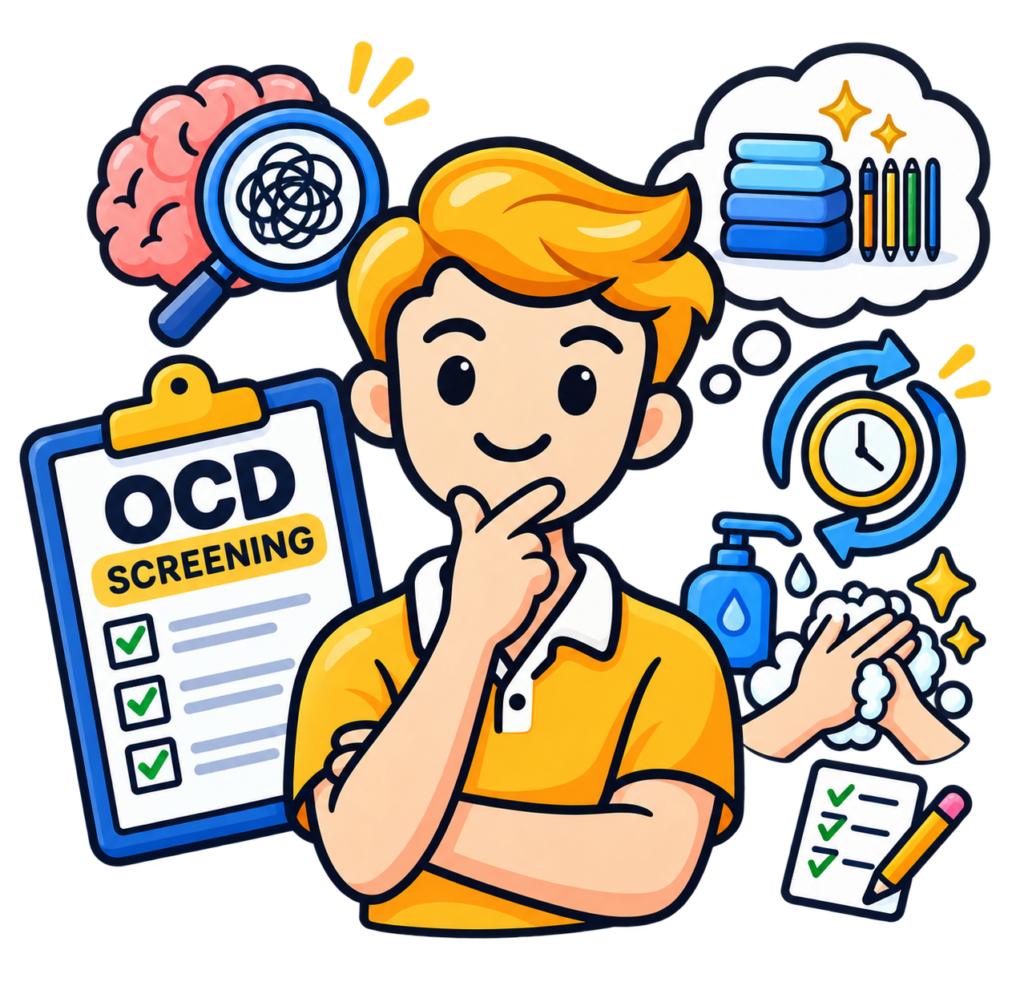
Obsessive-compulsive disorder (OCD) is often misunderstood. It is not simply liking things tidy. It is a distressing cycle: an intrusive thought, image or urge — an obsession — brings anxiety or disgust, and a behaviour or mental act — a compulsion — is used to neutralise that feeling. The relief is real, but it is […]
Self-Help for Panic Attacks: In-the-Moment Techniques That Work

A panic attack can feel frightening precisely because it arrives so suddenly: your heart pounds, your breathing quickens, your chest tightens, and a powerful sense of danger takes hold — even when you are, in fact, safe. Many people fear they are having a heart attack, losing control, or about to faint. Those fears are […]